
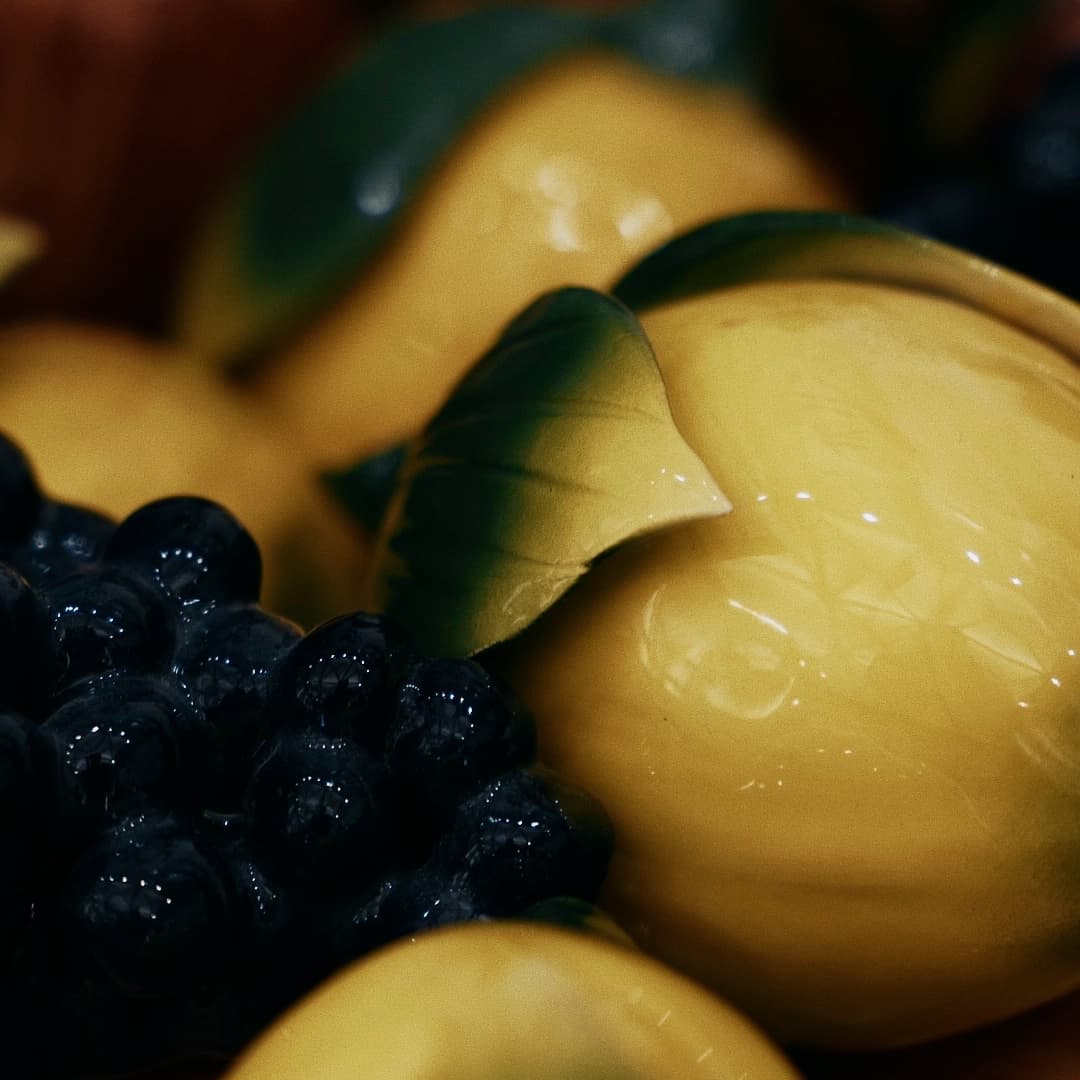
Amalfi Coast Ceramics
An Interview with Tamara of Ceramiche d’Urso
Tamara - Ceramiche D’Urso, Vietri sul Mare.
The Amalfi Coast is famous for a variety of things, and ceramics are just one of them. These small but powerful manifestations of art are not simply decoration here on the Coast, but a happy reminder of the culture and way of life belonging to the region. They belong to the landscape itself, shaped by the light, the sea air, and generations worth of tradition. Before the emmergence of ceramic trinkets as souvenirs, they were everyday companions: plates on the table, tiles on the walls, bowls made to last, shaped slowly by hand and the wear and tear of day-to-day life.
Today, many workshops still protect and carry this heritage forward,
choosing patience over speed and continuity over shortcuts. Among these custodians is Ceramiche d’Urso, where Tamara and her husband create pieces that are at the same time deeply rooted in the place, and personal. Her work speaks the visual language of the Amalfi Coast, featuring blues that shift like the sea, glazes that catch the light differently each day, and behind those colours lies an approach and philosophy that becomes a discipline shaped by time, repetition, and care.
What follows is a reconstructed conversation with Tamara, built from her own words. The questions are a guide; the voice, the rhythm, and the meaning are entirely hers.
Your day seems to begin well before the workshop opens. What role does the sea play in your routine?
Every morning, before coming to work, I go down to the sea. It’s something I need to do. Being there recharges me completely. It’s like resetting my senses before the day begins.
When I’m there, I don’t just look at the water. I observe how it changes, and the sea is never the same: the colours shift continuously, sometimes subtly, sometimes dramatically. One day it’s deep blue, another it turns green, silver, almost transparent. Every morning there’s a new shade.
Is that constant change what draws you to colour in your work?
Absolutely. The colours of the sea are always different, and that’s a huge source of inspiration for us. That emotion, that strong feeling you get when you really look at the water, is something we try to translate into our work, into our ceramics.
We don’t copy the sea; we respond to it. The colours you see on our pieces come from observation, from memory, from emotion. They’re not fixed formulas. Just like the sea, they’re alive.
Ceramics is often described as a slow craft. How do you experience time in your work?
Time is everything in ceramics. It’s a kind of work that demands it. And today, time feels almost contradictory, because everything around us is fast. People want things immediately. But ceramics simply doesn’t work that way.
It requires time, and it requires years of work. There’s no way around it. You can’t rush clay. You can’t force drying, glazing, firing. Each phase has its own rhythm, and you have to respect it.
Can you give a concrete example of what that slowness looks like in practice?
Even a very small plate takes time. To prepare it properly, you still need at least three days. Shaping, drying, glazing, firing. Each step depends on the one before. You can’t skip anything, and you can’t make it faster without compromising the result.
So no, ceramics cannot be quick. It’s simply not possible.
In a world that rewards speed, choosing this path feels almost deliberate. Is it?
Yes, very much so. It’s a choice we’ve made consciously. We chose to respect the past and to work the way ceramics were made many years ago.
That doesn’t mean rejecting the present, but it does mean refusing to sacrifice quality or meaning for speed. We work with the same patience, the same gestures, the same attention that artisans before us relied on. For us, that continuity matters.
What does that continuity represent to you personally?
It’s love. Love for the work itself. Love for the process, even when it’s demanding or slow. Ceramics teaches you humility, it reminds you that you’re collaborating with materials, not controlling them.
When you accept that, the work becomes something deeper than production. It becomes care.
Listening to you, ceramics feels less like a job and more like a world you live in.
Yes, that’s exactly how it is.
I’m Tamara, this is my world, and this is where I create my ceramics.
Everything I do, from walking by the sea in the morning to shaping clay in the workshop. is connected. It’s not just about making objects. It’s about living inside this rhythm, every single day.
About the author
Rossella is a consultant for Lemon Appeal. Her work focuses on research, cultural context, and deep connections with Southern Italian artisanal traditions. She helps our editorial and sourcing work with a sharp eye for authenticity, helping us identify producers who truly represent the heritage of the region.
She spent many of her childhood holidays on the Amalfi Coast and has been organising events in the area for over two decades. Through years of close, on-the-ground experience, she has come to know the Coast intimately — its people, its rhythms, and its craft culture.
About Lemon Appeal
Lemon Appeal’s mission is to bring and authentic expression of Southern Italian heritage to the world. Through stories, research, and carefully selected products, we work directly with artisans and producers who continue to preserve traditional knowledge and ways of working.
You can explore more articles on Italian artisanal excellence — and discover products sourced directly from these remarkable Italian makers — on our website.


